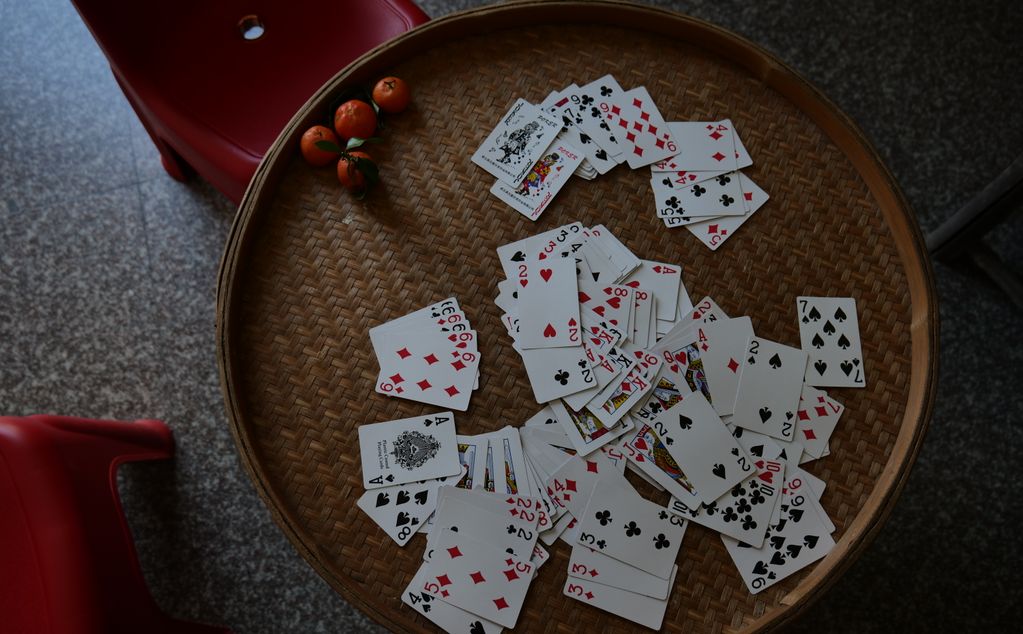

Blackjack has long ruled the online casino floor, and the romance‑filled rush of Valentine’s season only amplifies its allure. Players gather around virtual tables, hoping that a single perfect hand will spark both love and a life‑changing win. The rise of jackpot‑enabled blackjack variants adds a fresh layer of excitement, turning every decision into a “love‑at‑first‑hand” moment that can pay out millions.
If you’re also curious about other gambling options, you might want to explore the top betting sites in uae for a seamless cross‑border experience. Bookhelicopterindubai serves as a convenient portal for locating reputable platforms, whether you’re after sports wagering or casino action.
This guide promises a step‑by‑step technical deep‑dive. We’ll blend classic probability math with modern, cheat‑code‑style tactics, covering everything from counting systems to bankroll engineering, and finish with a look at future trends. Nine technical sections and a concise conclusion will equip you to turn Valentine’s love‑fest into a profitable blackjack adventure.
The Mathematics Behind Blackjack: From Basic Strategy to Advanced Card Counting
At its core, blackjack is a battle of probabilities. The dealer busts roughly 35 % of the time when showing a 4‑6, while the player’s bust rate hovers around 28 % on a hard 12. Basic strategy charts translate these odds into optimal hit, stand, double, or split decisions, reducing the house edge to about 0.5 % on a six‑deck game.
Advanced players move beyond static charts by employing counting systems. The Hi‑Lo method assigns +1 to low cards (2‑6), –1 to high cards (10‑A), and 0 to neutral cards (7‑9). A running count of +8 in a six‑deck shoe suggests a true count of +1.33 after dividing by the estimated decks remaining, indicating a modest player advantage. More complex systems like Omega II add weightings (e.g., +2 for 2‑3, –2 for 10) and require deeper concentration but can push the edge toward 1 % in favorable conditions.
Jackpot tables often use more decks or incorporate side‑bet cards, which dilute the count’s accuracy. Adjustments involve scaling the running count by the exact number of decks in play and accounting for side‑bet cards that do not affect the main hand. For instance, a Progressive Blackjack game with eight decks and a side‑bet that draws an extra Ace each round reduces the effective true count by roughly 0.125 per side‑bet card.
Understanding Jackpot Blackjack Variants: Rules, Payouts & Edge Shifts
Jackpot blackjack has exploded in popularity, offering progressive pools that can explode into seven‑figure sums. The most common variants include:
| Variant | Decks | Side‑Bet | Progressive Jackpot Trigger | RTP (standard) | RTP (jackpot) |
|---|---|---|---|---|---|
| Progressive Blackjack | 6 | 21+3 | 5 consecutive blackjacks | 99.5 % | 96.2 % |
| Blackjack Switch Jackpot | 8 | Switch Bonus | 2 simultaneous blackjacks | 98.9 % | 95.7 % |
| Double Exposure Jackpot | 6 | Perfect Pairs | 3 straight‑flush hands | 98.7 % | 95.0 % |
Side‑bet structures inflate the house edge. A 21+3 bet typically carries a 5 % edge, while Perfect Pairs can range from 2 % to 7 % depending on the payout schedule. The progressive jackpot itself adds a small negative expectancy because a portion of each wager fuels the pool rather than the player’s immediate return.
Choosing the right variant hinges on risk tolerance. If you prefer a modest edge and steady EV, Progressive Blackjack’s lower side‑bet cost is attractive. For high‑volatility thrill‑seekers, Blackjack Switch Jackpot’s dual‑hand mechanic offers more frequent “near‑miss” moments that can culminate in a massive payout.
Building a Technical Toolkit: Software, Trackers & Simulators
A disciplined player treats tools as extensions of their mind. Legal simulators such as Blackjack Apprenticeship and Casino Veritas let you rehearse counting drills with adjustable deck counts and speed settings. These platforms record hand histories, enabling post‑session analysis of decision accuracy.
Hand‑history trackers like Blackjack Analyzer can import logs from live‑dealer streams, highlighting dealer up‑card patterns and revealing subtle timing cues. Exported CSV files feed directly into custom spreadsheets where you can calculate running counts, true counts, and Kelly fractions in real time.
When constructing spreadsheets, include columns for bet size, true count, Kelly % (EV × bankroll ÷ variance), and a “jackpot reserve” flag. This visual cue reminds you to hold back a portion of your bankroll for progressive triggers.
Security matters: ensure any software you install is open‑source or comes from a reputable vendor. Avoid tools that require you to modify the casino’s client, as this breaches terms of service and can lead to account suspension.
Bankroll Management for High‑Stakes Jackpot Play
Effective bankroll management is the backbone of any serious blackjack strategy. The Kelly Criterion offers a formulaic approach: Kelly % = (EV ÷ variance). For a variable‑payout jackpot hand with an expected value of 0.02 and a variance of 0.25, the optimal wager is 8 % of your bankroll per unit. However, because jackpot games exhibit extreme volatility, most pros cap Kelly at half‑Kelly to smooth swings.
Session sizing should follow a 20‑hand minimum before adjusting bet levels. Set a loss limit at 5 % of total bankroll and allocate a “jackpot reserve” equal to 10 % of that bankroll, untouched unless the progressive meter reaches 75 % of its cap.
Consider a player with a $10,000 bankroll who follows a half‑Kelly strategy on a 1 % edge hand. Their base bet would be $40. During a streak where the progressive jackpot climbs to $500,000, they might increase the base bet to $80 while still preserving the reserve. If a losing streak erodes the reserve below $800, the player reverts to the original $40 bet and pauses side‑bet activity.
Psychologically, Valentine’s promotions can tempt you to chase losses with larger bets. Stick to pre‑defined limits, and treat each promotional bonus as supplemental bankroll rather than a reason to deviate from your plan.
Exploiting Dealer Weaknesses: Timing, Shuffling Patterns & RNG Insights
Live‑dealer streams provide a window into the dealer’s shuffling rhythm. Many platforms use a “cut‑and‑shuffle” algorithm that repeats every 52 cards. By noting the interval between the dealer’s hand‑deal and the subsequent shuffle animation, you can estimate when a fresh shoe is about to begin—a moment when the count resets to neutral.
RNG‑based tables, especially those powered by Mersenne Twister seeds, exhibit predictable cycles after a large number of hands. Some analysts have observed that after roughly 10,000 hands, the seed advances in a linear fashion, creating short windows where high‑card density spikes. While exploiting this requires sophisticated data collection, a simpler approach is to monitor the dealer’s “pause” time between hands; longer pauses often indicate a reshuffle.
Timing cues such as the speed of bet placement can also be leveraged. A rapid bet after the dealer reveals the up‑card may signal confidence in a high‑count scenario, whereas a deliberate pause may reflect uncertainty. Use these observations to fine‑tune your own betting rhythm, but always stay within ethical boundaries and casino rules.
Side‑Bet Mastery: Maximizing Jackpot Contributions Without Inflating Risk
Side‑bets can boost jackpot contributions when timed correctly. Perfect Pairs, for example, pays 25 : 1 on a perfect pair and 5 : 1 on a mixed pair. The expected value of Perfect Pairs in a six‑deck shoe is roughly 0.02 when the deck composition is neutral. However, when the true count exceeds +4, the probability of a pair rises, pushing EV to about 0.04.
To calculate EV for a side‑bet, use the formula EV = (payout × probability) – (bet × (1 – probability)). If the jackpot is within 10 % of its trigger, increase the side‑bet by 50 % to ride the momentum, then drop it back to the baseline once the jackpot resets.
Bullet list of side‑bet timing tips:
- Raise side‑bets only when the true count is +3 or higher.
- Reduce or pause side‑bets during reshuffle periods.
- Align side‑bet spikes with promotional “double‑jackpot” windows offered on Valentine’s days.
By stacking side‑bets during high‑count, high‑jackpot moments, you add modest EV without jeopardizing core bankroll stability.
Seasonal Strategies: Leveraging Valentine’s Day Bonuses & Promotions
Casinos roll out themed promotions for Valentine’s Day, often featuring deposit matches up to 150 %, free “love‑the‑hand” bets, and extra jackpot contributions for couples playing together. These bonuses effectively increase your bankroll by a fixed percentage, which can be folded into the Kelly calculation as an uplifted EV.
Integrate the bonus by treating it as an independent bankroll slice. For example, a $500 deposit match on a $1,000 deposit creates a $500 bonus pool that can be allocated exclusively to side‑bets, preserving your primary bankroll for main hand play.
Timing is crucial. Most Valentine’s offers run from February 10 to February 14, with a “last‑call” surge on the 14th. Schedule your high‑risk jackpot sessions for the final 24 hours to benefit from the maximum bonus multiplier while the progressive jackpot is near its peak.
Real‑World Case Studies: Winning the Jackpot with Technical Precision
Case 1 – “The Analyst”
Starting bankroll: $8,000. Used Hi‑Lo counting on Progressive Blackjack, kept a true count of +2 for 45 % of the session. Applied half‑Kelly, betting $64 per hand, and increased Perfect Pairs side‑bet by 30 % when the count hit +3. After a 120‑hand streak, the progressive jackpot hit $750,000, and a single blackjack hand secured the win. The analyst’s disciplined bankroll curve showed a 12 % dip before the jackpot, then a 250 % surge.
Case 2 – “The Timing Guru”
Bankroll: $12,500. Focused on live‑dealer shuffle timing in Blackjack Switch Jackpot. Noted a 7‑second shuffle interval that preceded a fresh shoe. Placed a $120 base bet (half‑Kelly) only after the shuffle, and doubled the Switch Bonus side‑bet during the first 15 hands of the new shoe. The jackpot triggered at $420,000, delivering a $45,000 payout that covered the session’s variance.
Case 3 – “The Seasonal Player”
Bankroll: $5,000. Leveraged a 150 % Valentine’s deposit match from Bookhelicopterindubai’s recommended site, creating a $7,500 effective bankroll. Employed Omega II counting on Double Exposure Jackpot, betting $80 per hand with a 20 % side‑bet increase during the last promotion day. A perfect pair on the final hand unlocked a $300,000 jackpot, netting a $28,000 profit after taxes.
Common lessons: precise counting, disciplined bet sizing, and aligning side‑bets with jackpot thresholds dramatically improve success odds. Pitfalls avoided include over‑betting during neutral counts and ignoring reshuffle cues.
Future Trends: AI‑Assisted Play, VR Tables & the Evolution of Jackpot Blackjack
Artificial intelligence is beginning to appear as a personal advisor within casino apps, offering real‑time count updates and optimal bet suggestions based on live data streams. While most jurisdictions restrict AI assistance to “training mode,” the technology hints at future hybrid platforms where players can overlay statistical overlays on VR tables.
Virtual reality blackjack tables promise immersive environments with 3‑D dealers and tactile chip handling. These setups may introduce new RNG mechanisms, potentially altering the traditional house edge. However, the core skills—probability assessment, bankroll discipline, and side‑bet timing—will remain relevant regardless of visual upgrades.
Preparing for this evolution means honing adaptable strategies: keep your counting fundamentals sharp, maintain flexible bankroll spreadsheets, and stay informed through neutral resources such as Bookhelicopterindubai, which tracks emerging casino technologies without bias.
Conclusion
We have explored the technical pillars that turn online blackjack from a game of chance into a skill‑driven pursuit: solid mathematics, deep knowledge of jackpot variants, a reliable toolkit, disciplined bankroll management, exploitation of dealer patterns, savvy side‑bet handling, and strategic use of Valentine’s promotions. By integrating these elements, you can chase progressive jackpots with confidence, all while enjoying the romantic atmosphere of the season.
Apply the strategies responsibly, keep refining your technique, and let the love of the game guide you to long‑term success. Happy playing, and may your next hand be both lucky and mathematically sound.